Avete bisogno della barriera fotoelettrica di sicurezza giusta per la vostra macchina?
Comunicateci il tipo di macchina e i requisiti di protezione. Il nostro team di ingegneri vi aiuterà a scegliere la barriera fotoelettrica di sicurezza, il sensore o il lidar di sicurezza più adatti al vostro progetto.
Ottenere supporto per:
Progetti di barriere fotoelettriche di sicurezza standard e personalizzate
Esigenze di OEM, integrazione, distribuzione e aggiornamento in fabbrica
Selezione del prodotto in base al layout della macchina, al campo di rilevamento, all'uscita e all'ambiente
La bugia sulla risoluzione che nessuno vuole dire ad alta voce
Più fine è la tentazione.
Ma scegliere la risoluzione della barriera fotoelettrica dicendo “10 mm devono essere più sicuri di 20 mm” è il tipo di logica d'acquisto pigra che sembra buona in un file di preventivo e brutta dopo un incidente sfiorato, perché la vera questione non è solo la distanza tra i raggi, ma se il campo di rilevamento, il tempo di arresto, la distanza di montaggio, il comportamento di ripristino e la resistenza alla contaminazione proteggono ancora l'operatore quando la macchina è sporca, vibrante e sotto pressione di produzione.
Allora perché gli acquirenti continuano a chiedere prima il numero più piccolo?
Perché la risoluzione è facile da confrontare. Il rischio non lo è.
La risoluzione della barriera fotoelettrica è la dimensione minima dell'oggetto che una barriera fotoelettrica di sicurezza può rilevare in modo affidabile quando entra nel campo protetto. In parole povere: 10 mm sono generalmente destinati al rilevamento delle dita, 20 mm al rilevamento del palmo della mano o di una zona più piccola e una spaziatura più ampia alla protezione di accessi più ampi. Ma questo non significa che tutte le applicazioni debbano perseguire la più piccola distanza tra i raggi.
Lo dico senza mezzi termini: una barriera fotoelettrica di “alta precisione” installata male può essere peggiore di un dispositivo di protezione più semplice che corrisponde effettivamente al pericolo. L'ottica può essere eccellente. L'installazione può essere comunque scadente.
Questa distinzione è importante perché la regola dell'OSHA sulla protezione delle macchine, ai sensi del 29 CFR 1910.212 richiede una protezione che impedisca all'operatore di posizionare qualsiasi parte del corpo nella zona di pericolo durante il ciclo operativo. Non dice “compra la migliore risoluzione e spera”.”
Se state cercando assemblaggi di piccoli pezzi, macchine elettroniche, servo presse, macchine per l'imballaggio o sistemi di pick-and-place di precisione, iniziate con la vera famiglia di prodotti: una barriera fotoelettrica di alta precisione progettato per un rilevamento preciso, un'uscita stabile e un'integrazione di protezione delle macchine. Quindi interrogate l'applicazione come un investigatore ostile.
Indice dei contenuti
I tre numeri che determinano il funzionamento della risoluzione delle barriere fotoelettriche
La maggior parte dei team di approvvigionamento chiede prima la risoluzione. Io chiedo tre numeri prima di fidarmi di qualsiasi selezione:
Obiettivo del rilevamento: dito, palmo, mano o corpo?
La risoluzione di una barriera fotoelettrica di 10 mm non è una specifica del trofeo. È una scelta di rilevamento. Se il pericolo permette a un dito di raggiungere un punto di contatto, un fascio di luce grossolano può non notare l'intrusione. Se l'operatore attraversa un'apertura perimetrale solo con un braccio o un corpo intero, un sistema da 10 mm può essere eccessivo, costoso e più sensibile ai problemi di allineamento.
Ad esempio, un Barriera luminosa di 10 mm ad alta precisione con doppia uscita PNP ha senso quando la protezione delle dita è il compito effettivo. Le specifiche pubblicate lo classificano con una distanza tra i raggi di 10 mm, copertura IEC61496-1/2 di classe IV, doppia uscita PNP indipendente, supporto EDM e tempo di risposta di 5-30 ms.
Sono dati utili. Non è un lasciapassare.
Il tempo di stop: il numero sporco che tutti evitano di fare
Una barriera fotoelettrica di sicurezza non arresta una macchina. La macchina si ferma. La barriera fotoelettrica invia solo il segnale.
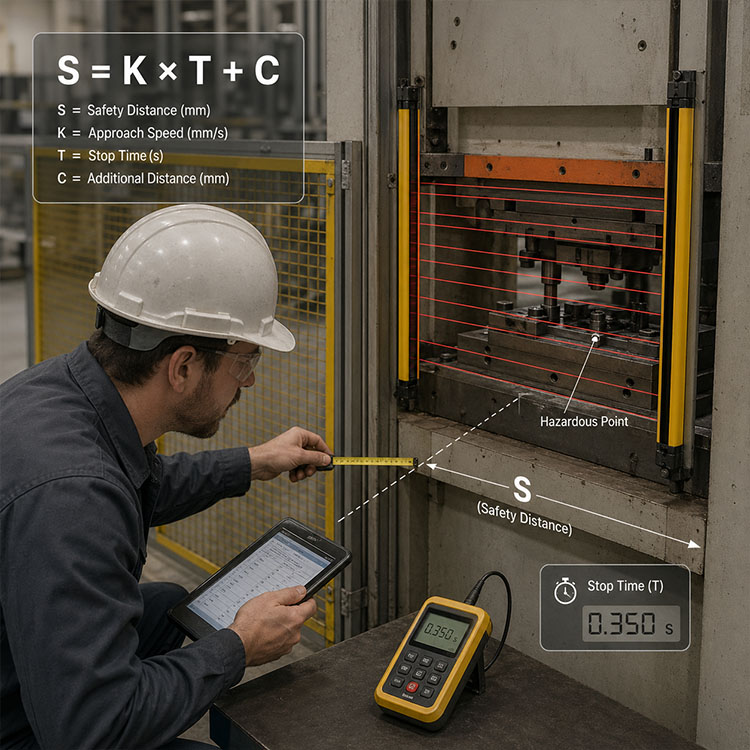
La guida dell'OSHA sui dispositivi di rilevamento della presenza afferma che le barriere fotoelettriche sono protezioni comuni e sono progettate per arrestare la corsa della macchina se il campo di rilevamento viene interrotto, ma avverte anche che devono essere soddisfatti molti requisiti prima di poter essere utilizzate come protezioni del punto di lavoro. Nella stessa pagina dell'OSHA si legge che la distanza di sicurezza dal campo di rilevamento al punto di lavoro deve essere maggiore della distanza calcolata, non deve essere indovinata a occhio, non deve essere copiata da una macchina della concorrenza e non deve essere ridotta per risparmiare spazio in una linea affollata. Vedi OSHA Guida ai dispositivi di rilevamento della presenza.
Ecco la versione scomoda: se il tempo di arresto totale è troppo lungo, una risoluzione più fine può costringere a una distanza di sicurezza superiore a quella tollerata dal layout della macchina. Allora la gente imbroglia. Lo montano più vicino. Lo aggirano. Creano un bel guasto di conformità.
Ambiente: polvere, olio, acqua, vibrazioni e rifiuti riflettenti
Il sensore non vive in una brochure.
Vive in prossimità di nebbia di refrigerante, polvere di farina, alluminio, polvere di PVC, impronte digitali, residui di lavaggio alcalino come NaOH, incrostazioni minerali come CaCO3, pellicole saline come NaCl, olio idraulico e l'occasionale urto del carrello elevatore che nessuno segnala.
È qui che molte installazioni di sensori a barriera fotoelettrica di alta precisione perdono credibilità. La spaziatura fine dei raggi può essere più impegnativa. Più raggi significano più percorsi ottici da mantenere puliti, allineati e stabili. In una cella di assemblaggio elettronica pulita, questo può andare bene. In una linea di trasformazione della carta polverosa o in un processo alimentare umido, è necessario trattare la contaminazione come un input di progettazione, non come una sorpresa di manutenzione.
Per gli ambienti umidi o soggetti a lavaggi, collegare la conversazione di selezione in anticipo ad una barriera fotoelettrica di sicurezza impermeabile piuttosto che pretendere che un'unità standard ad alta precisione si comporti in modo educato in presenza di umidità, residui di detergenti e spruzzi.
Tabella di selezione delle risoluzioni: Cosa contesterei effettivamente in una revisione
Risoluzione della barriera fotoelettrica
Intento di rilevamento tipico
Dove ha senso
Rischio di allineamento
Rischio di contaminazione
Il mio duro innesco di rifiuto
10 mm
Protezione delle dita
Assemblaggio di piccoli pezzi, presse di precisione, macchine elettroniche, accesso ristretto dell'operatore
Più alto, perché la spaziatura fine del fascio richiede un montaggio meccanico più pulito
Più elevato in presenza di polvere, nebbia d'olio, residui di lavaggio o forti vibrazioni
Rifiuto se il telaio della macchina si flette, se la finestra dell'obiettivo si sporca quotidianamente o se mancano i dati del tempo di arresto
20 mm
Protezione del palmo o della zona più fine della mano
Macchine per l'imballaggio, accesso servo-sicuro, protezione compatta del punto di lavoro
Moderato, richiede comunque staffe solide e una geometria stabile tra trasmettitore e ricevitore
Moderato; gestibile con accesso alla pulizia e migliore scelta abitativa
Rifiutate se gli acquirenti vogliono la “sicurezza per le dita”, ma la valutazione del rischio dice che le dita possono raggiungere il pericolo.
30-40 mm
Protezioni per le mani/braccia o per le zone di accesso, a seconda del layout e della revisione degli standard.
Aperture più ampie, zone di trasferimento, controllo degli accessi di minore precisione
Più basso di 10 mm, ma ancora vulnerabile alle vibrazioni e alle staffe scadenti
Un numero inferiore di raggi aiuta, ma la contaminazione può ancora bloccare il campo
Rifiuto per le piccole aperture in cui le dita possono raggiungere la zona di pericolo
Layout su più lati o perimetrali
Accesso al corpo e controllo di passaggio
Celle robotizzate, ingressi macchina più grandi, punti di accesso complessi
Dipende molto dagli specchi, dai montanti d'angolo e dalla prevenzione del passaggio.
Le superfici riflettenti e gli specchi sporchi possono diventare un punto debole
Rifiuto se la logica di reset consente a una persona di sostare all'interno della zona sorvegliata senza essere vista.
A Barriera fotoelettrica di 20 mm ad alta precisione con architettura IEC61496 Classe IV è spesso la via di mezzo più onesta per la protezione del palmo della mano quando 10 mm sarebbero eccessivi. La configurazione pubblicata comprende spaziatura di 20 mm, doppio PNP indipendente, supporto EDM, tempo di risposta di 5-30 ms e un guscio metallico di 35 mm × 50 mm con display digitale.
Questo profilo di specifiche sembra pratico. Ma ancora una volta: la risoluzione non salva l'installazione debole.
I problemi di allineamento sono in genere problemi di progettazione Indossare gli indumenti per la manutenzione
Le staffe difettose costano le dita.
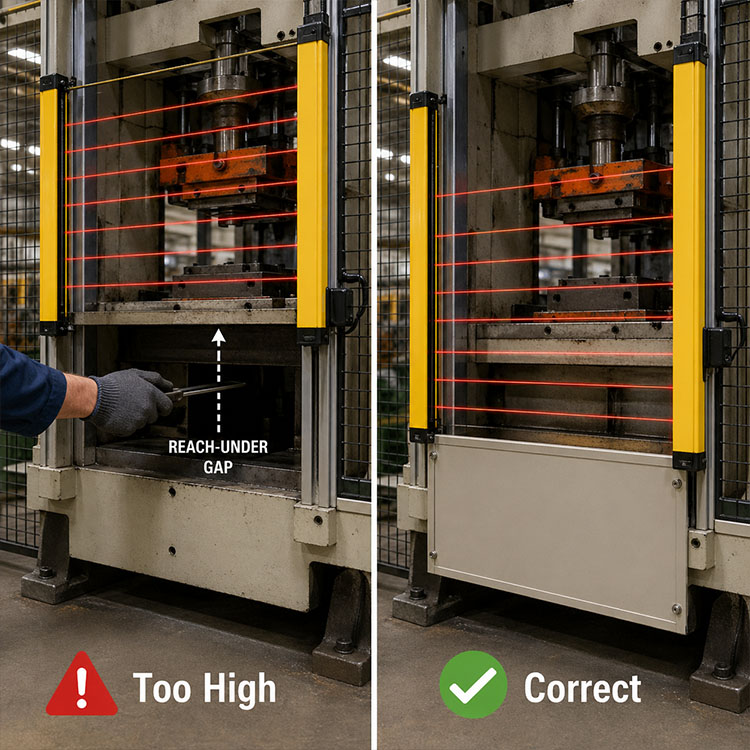
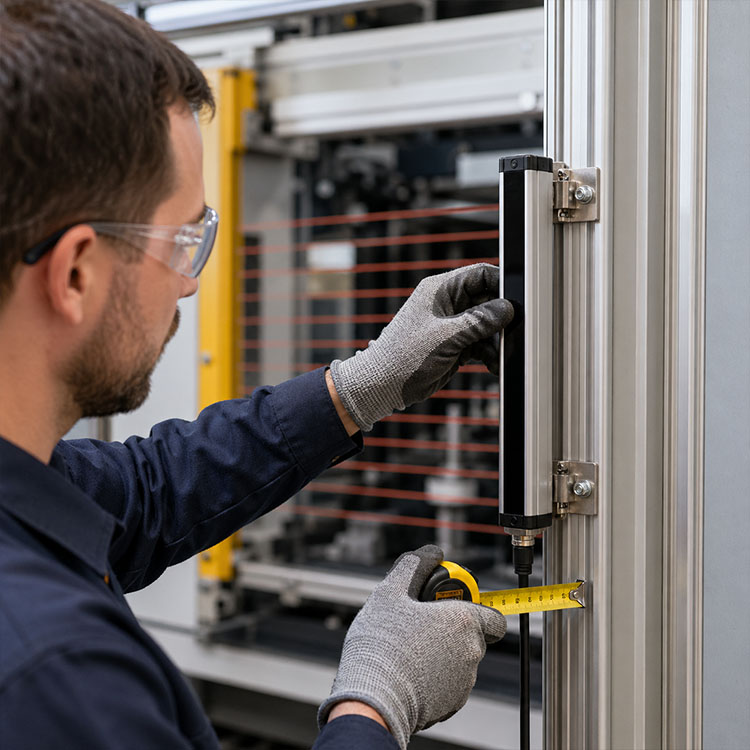
È una frase breve, ma spiega gran parte dei guasti sul campo: quando un trasmettitore e un ricevitore sono montati su porte di lamiera sottile, telai di macchine vibranti, estrusi di alluminio flessibili o staffe che sono state “regolate” con le pinze durante la messa in servizio, la barriera fotoelettrica diventa un generatore di fastidio e gli operatori iniziano a vederla come un nemico.
Cosa succede dopo?
Qualcuno incolla un catarifrangente. Qualcuno allenta una staffa. Qualcuno cambia l'abitudine di reimpostare la macchina. Qualcuno esclude un ingresso di sicurezza “solo per questo lotto”.”
Non si tratta di teoria. Il Dipartimento del Lavoro degli Stati Uniti ha riportato un caso in cui l'OSHA ha citato un'azienda produttrice di sacchetti di plastica del Wisconsin dopo che un lavoratore aveva subito un'amputazione parziale mentre eliminava un inceppamento; gli ispettori hanno scoperto che le barriere fotoelettriche installate dal produttore della macchina erano state disattivate e l'OSHA ha proposto $78.325 di sanzioni.
Questo caso dovrebbe mettere in imbarazzo tutti coloro che ancora considerano i viaggi fastidiosi come una piccola irritazione di produzione. I viaggi fastidiosi addestrano le persone a non rispettare la sicurezza.
La lista di controllo dell'allineamento di cui mi fido
Utilizzarlo prima di incolpare il sensore:
Verificare che il trasmettitore e il ricevitore siano montati su una struttura rigida e non su un pannello di accesso flessibile.
Verificare se i picchi di vibrazione si verificano durante l'impatto della pressa, l'indicizzazione del trasportatore, la decelerazione del servo o il ritorno del cilindro pneumatico.
Verificare che la sincronizzazione ottica funzioni su tutta l'altezza della protezione, non solo sulla parte superiore e inferiore.
Se possibile, tenere i pannelli riflettenti in acciaio inox, le pellicole cromate, le borse lucide e l'alluminio lucido lontano dai percorsi ottici.
Aggiungete una protezione fisica in modo che un carrello elevatore, un pallet o un carrello degli attrezzi non possano mettere fuori linea il ricevitore.
Lasciare uno spazio sufficiente per la pulizia. Se i tecnici devono rimuovere le protezioni solo per pulire le lenti, il progetto è già un problema.
Se l'applicazione ha una geometria strana, non improvvisate con i modelli del catalogo. Utilizzare Guida alla scelta dei dispositivi di sicurezza e costringere la discussione a tornare alla direzione di accesso, al tempo di arresto, ai requisiti PL, al muting, al blanking, all'EDM e al comportamento di reset.
La contaminazione non è un problema di manutenzione. È un problema di specifiche.
Non mi piace la frase “mantenere l'obiettivo pulito” perché sembra un consiglio. In molte fabbriche, si tratta di un pio desiderio.
La polvere capita. Capita l'olio. Capita l'acqua. Gli operatori toccano le cose. La manutenzione spruzza cose. Gli addetti alle pulizie usano sostanze chimiche che nessuno ha documentato nella revisione originale della sicurezza. E poi la risoluzione della barriera ottica, che sembrava perfetta in un PDF, inizia a produrre falsi interventi, margini di segnale deboli o una condizione di blocco ogni lunedì mattina.
Quindi la domanda giusta non è: “La barriera fotoelettrica è in grado di rilevare 10 mm?”. La domanda giusta è: “Può ancora rilevare 10 mm dopo sei mesi di polvere, vibrazioni, impronte digitali e pulizie affrettate?”.”
Modelli di contaminazione che segnalerei immediatamente
La polvere fine è fastidiosa perché ricopre la lente in modo uniforme e lento. La nebbia d'olio è peggiore perché intrappola la polvere in una pellicola. Le gocce d'acqua disperdono la luce. I residui di detersivo si asciugano in una foschia ottica. La polvere metallica può creare un comportamento intermittente se si deposita in modo non uniforme. La contaminazione riflettente vicino al percorso del fascio può creare una confusione ottica che sembra casuale finché non si rallenta e si mappa l'ambiente.
Cosa dicono i dati sugli incidenti riguardo ai “piccoli” errori di protezione
I numeri non sono astratti.
Il BLS ha riferito che i datori di lavoro dell'industria privata hanno registrato 2,5 milioni di infortuni e malattie sul lavoro non mortali nel 2024, con un calo del 3,1% rispetto al 2023, mentre il tasso totale di casi registrabili è stato di 2,3 casi per 100 lavoratori equivalenti a tempo pieno. L'industria manifatturiera ha registrato ancora un tasso totale di casi registrabili pari a 2,7 per 100 lavoratori equivalenti a tempo pieno nel 2024, con l'industria alimentare a 3,3 e diversi sotto-settori di macchinari più alti.
Questi numeri non dimostrano un guasto specifico della barriera fotoelettrica. Dimostrano che l'ambiente operativo non è delicato.
L'eTool sulla protezione delle macchine dell'OSHA include un rapporto sull'incidente occorso a una punzonatrice da 125 tonnellate, in cui un lavoratore ha riportato lesioni da schiacciamento e l'amputazione parziale di tre dita dopo aver raggiunto l'area dello stampo mentre il pedale della pressa era in funzione. Questo esempio compare all'interno dell'OSHA materiale del dispositivo di rilevamento della presenza, che è esattamente il tipo di avvertimento reale che gli acquirenti dovrebbero leggere prima di ridurre la protezione della macchina alla distanza tra le travi.
Tre dita. Un colpo.
Una migliore risoluzione della barriera fotoelettrica avrebbe aiutato? Forse. Avrebbero contato anche la distanza di sicurezza corretta, la convalida del tempo di arresto, la logica dei pedali, il comportamento dell'operatore e la copertura dei ripari? Assolutamente sì.
Il mio metodo di selezione per la risoluzione della barriera fotoelettrica ad alta precisione
Fase 1: Definire la parte del corpo, non il prodotto
Iniziare con il pericolo. Dito? Palmo? Mano? Braccio? Tutto il corpo? Se un dito può raggiungere il punto di schiacciamento, taglio, cesoiamento o pizzicamento, non fate finta che un dispositivo a distanza maggiore sia equivalente. Se è necessario rilevare un corpo a un cancello di accesso, non pagate troppo per una risoluzione di 10 mm ignorando la protezione da passaggio.
Fase 2: calcolare la distanza di sicurezza prima di scegliere la risoluzione finale
La risoluzione influisce sulla vicinanza del dispositivo e sulla velocità di reazione del sistema. Un tempo di risposta di 5-30 ms può sembrare veloce, ma la funzione di sicurezza totale comprende la risposta del sensore, l'elaborazione del relè di sicurezza o del controllore, il comportamento del contattore, la chiusura della valvola, il tempo di frenata, il coast-down meccanico e il tempo di arresto misurato in tempo reale.
Non fidatevi mai del solo “tempo di arresto nominale”. Misuratelo.
Fase 3: Adattare l'alloggiamento e la protezione ambientale all'impianto
Una macchina compatta per camera bianca e una pressa idraulica vibrante non hanno bisogno della stessa strategia di alloggiamento. Se il progetto prevede la presenza di polvere, spruzzi, umidità, refrigeranti o polveri, è necessario che i requisiti ambientali siano esplicitati nella RFQ.
Per i modelli ad alta precisione, chiedete informazioni sull'altezza di protezione, la distanza tra gli assi del fascio, il tipo di uscita, il supporto per l'elettroerosione, il tempo di risposta, la gamma operativa, il grado di protezione IP, le dimensioni dell'alloggiamento, la rigidità della staffa di montaggio, la direzione di uscita del cavo e il display diagnostico. Se il fornitore non è in grado di rispondere senza usare un linguaggio vago, continuate a spostarvi.
Fase 4: progettazione per la pulizia senza bypass
Una barriera fotoelettrica che necessita di una pulizia frequente deve essere raggiungibile. Se la pulizia richiede l'uso di attrezzi, un accesso scomodo, tempi di fermo della produzione o un accesso non consentito, i lavoratori finiranno per trovare delle scorciatoie. Non si tratta di un difetto del lavoratore. È un difetto di progettazione.
Fase 5: convalida della logica di reset
Il reset manuale, l'interblocco al riavvio, l'EDM, il muting e il blanking sono i punti in cui molti sistemi diventano pericolosi pur sembrando cablati in modo professionale. Una barriera fotoelettrica di sicurezza di alta precisione non deve consentire il riavvio mentre una persona rimane nella zona di pericolo e il reset non deve mai diventare un comando di avvio mascherato.
Per le discussioni a livello di progettazione, utilizzare il sito guide all'applicazione e alla progettazione per collegare la decisione di risoluzione con il comportamento di reset, l'accesso su più lati, le alternative di scanner e la protezione ibrida.
Una lista di controllo dell'acquirente prima di approvare il preventivo
Prima di emettere un ordine di acquisto, esigete le risposte a queste domande:
Quale risoluzione esatta della barriera fotoelettrica viene proposta? 10 mm, 20 mm, 30 mm, 40 mm o un altro valore?
Quale parte del corpo è destinata a rilevare la risoluzione?
Qual è il tempo di arresto misurato della macchina completa?
Quale calcolo della distanza di sicurezza è stato utilizzato?
Il dispositivo è conforme al tipo IEC 61496 richiesto e al PL ISO 13849 di destinazione della macchina?
L'uscita è PNP, NPN, OSSD, relè o un'altra architettura?
L'EDM è necessario per il monitoraggio di contattori o relè esterni?
Il sensore è esposto a polvere, nebbia d'olio, acqua, vapore, detergente NaOH, incrostazioni di CaCO3 o residui di NaCl?
È possibile pulire la lente senza bypassare o smontare la protezione?
Ci sono vibrazioni durante la corsa della macchina, l'indicizzazione, la frenata o l'impatto?
Ci sono superfici riflettenti vicino al percorso del fascio?
È necessario il muting o il blanking ed è stato valutato il rischio?
Chi firma la convalida finale dopo l'installazione?
Questo non è il teatro delle scartoffie. È qui che si nasconde la responsabilità.
Domande frequenti
Che cos'è la risoluzione della barriera fotoelettrica?
La risoluzione della barriera fotoelettrica è il diametro minimo dell'oggetto che una barriera fotoelettrica di sicurezza è in grado di rilevare in modo affidabile quando l'oggetto entra nel campo di rilevamento e viene normalmente utilizzata per adattare il dispositivo ai requisiti di protezione delle dita, dei palmi delle mani, delle braccia o del corpo in un'applicazione di protezione delle macchine.
Una risoluzione della barriera fotoelettrica di 10 mm è solitamente associata alla protezione delle dita. Una risoluzione della barriera ottica di 20 mm è comunemente utilizzata per il rilevamento del palmo della mano o di zone più fini. Una maggiore distanza tra i raggi può essere adatta alle protezioni di accesso, ma può essere poco sicura per i pericoli del punto operativo, dove parti del corpo più piccole possono raggiungere l'area di pericolo.
Come si sceglie la risoluzione della barriera fotoelettrica per una macchina di alta precisione?
La risoluzione della barriera fotoelettrica viene scelta identificando la parte del corpo più piccola che può raggiungere il pericolo, calcolando la distanza di sicurezza necessaria in base al tempo di arresto misurato e confermando che la distanza del raggio, il tempo di risposta, la posizione di montaggio e la protezione ambientale del sensore rimangono affidabili in condizioni di produzione reali.
Per i macchinari di alta precisione, non inizierei dal prezzo. Inizierei con la geometria dell'accesso, il tempo di arresto, la gravità del pericolo, la direzione di avvicinamento e l'esposizione alla contaminazione. Solo allora confronterei le opzioni di risoluzione da 10 mm, 20 mm o più ampie.
La risoluzione della barriera fotoelettrica da 10 mm è sempre migliore di quella da 20 mm?
Una risoluzione di 10 mm della barriera fotoelettrica non è sempre migliore di 20 mm, perché un rilevamento più fine può aumentare la sensibilità di allineamento, la sensibilità alla contaminazione, il costo e l'onere di manutenzione quando il pericolo effettivo richiede solo il rilevamento del palmo della mano o della zona di accesso piuttosto che la protezione a livello delle dita.
La dura verità è che la sovraspecificazione può creare interventi fastidiosi. Gli interventi indesiderati creano una pressione di bypass. La pressione di bypass crea il tipo di guasto alla sicurezza che sembra impossibile in una riunione e ovvio dopo un'indagine sugli infortuni.
Quali sono le cause dei problemi di allineamento delle barriere fotoelettriche di sicurezza?
I problemi di allineamento delle barriere fotoelettriche di sicurezza sono solitamente causati da una struttura di montaggio debole, dalle vibrazioni della macchina, dalla flessione del telaio, da una progettazione inadeguata delle staffe, da superfici vicine riflettenti, da campi di rilevamento lunghi, da urti accidentali o da scorciatoie di installazione che impediscono al trasmettitore e al ricevitore di mantenere un percorso ottico stabile durante la produzione.
I sensori a barriera fotoelettrica ad alta precisione sono meno indulgenti, perché la maggiore distanza tra i raggi lascia all'installazione meno spazio per una meccanica approssimativa. Se la macchina si muove, la staffa si torce o il ricevitore viene spinto da un carrello, il sistema può diventare instabile.
In che modo la contaminazione può influire sulla risoluzione delle barriere ottiche?
La contaminazione influisce sulla risoluzione della barriera fotoelettrica bloccando, disperdendo, riflettendo o indebolendo il percorso del raggio infrarosso, il che può produrre falsi interventi, margini operativi ridotti, errori di rilevamento intermittenti o ipotesi non sicure sul fatto che il campo di rilevamento funzioni ancora come convalidato in origine.
Polvere, nebbia d'olio, gocce d'acqua, residui del lavaggio con NaOH, incrostazioni minerali di CaCO3 e pellicole di NaCl meritano attenzione prima della scelta del modello. Negli impianti sporchi o umidi, la protezione dell'ambiente può essere importante quanto la risoluzione.
Di quale risoluzione ho bisogno per una barriera fotoelettrica di sicurezza?
La risoluzione necessaria per una barriera fotoelettrica di sicurezza dipende dalla parte del corpo da proteggere, dal tempo di arresto misurato della macchina, dalla distanza di sicurezza, dalla geometria del punto di lavoro, dalla norma di sicurezza applicabile e dalle condizioni ambientali intorno al trasmettitore e al ricevitore.
Utilizzare 10 mm solo quando il rilevamento delle dita è giustificato. Usare 20 mm quando il rilevamento del palmo della mano o di una zona più fine è un requisito reale. Utilizzare spazi più ampi solo quando il rischio di accesso lo consente e la revisione della sicurezza lo supporta.
Riflessioni finali: Scegliere la risoluzione che si può difendere
La migliore barriera fotoelettrica di sicurezza non è quella con il numero più piccolo nella brochure. È quella che si può difendere dopo un guasto, dopo sei mesi di contaminazione, dopo che un supervisore di produzione si lamenta di arresti fastidiosi e dopo che qualcuno chiede perché il dispositivo è stato montato dove è stato montato.
Scegliete quindi la risoluzione delle tende leggere con disciplina.
Iniziare con il pericolo. Confermare il tempo di arresto. Calcolare la distanza. Sfidare il montaggio. Prevedere la contaminazione. Convalidare la logica di reset. Quindi selezionare il dispositivo.
Per i progetti di OEM, distributori o retrofit, inviare al produttore il tipo di macchina, la zona di pericolo, l'altezza di protezione, la risoluzione richiesta, i dati relativi ai tempi di arresto, le foto dell'installazione, i requisiti di uscita e i dettagli sull'esposizione ambientale attraverso il sito web Pagina di contatto e di offerta della barriera fotoelettrica di sicurezza. Una RFQ seria non dovrebbe dire “serve una barriera fotoelettrica”. Deve dire esattamente a cosa deve sopravvivere la macchina.