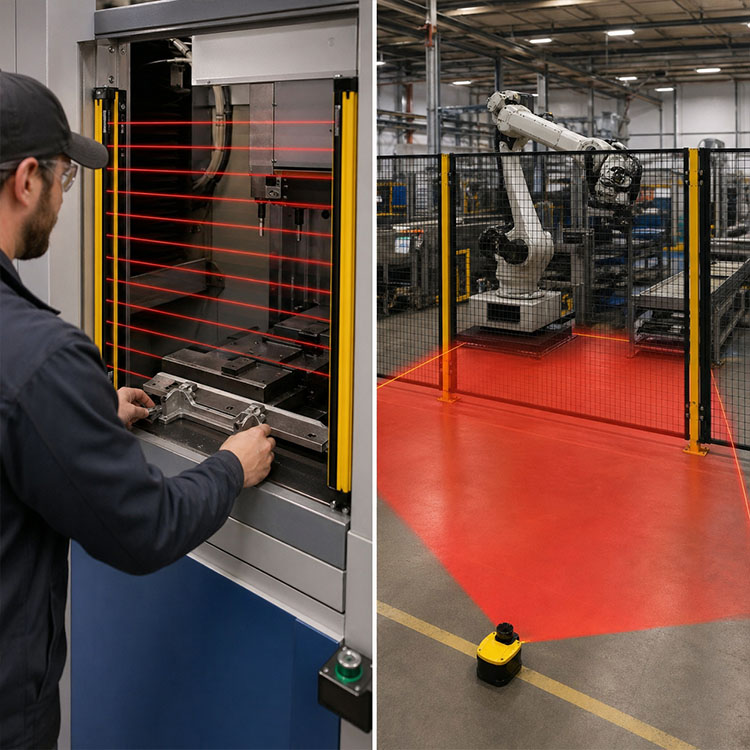
Avete bisogno della barriera fotoelettrica di sicurezza giusta per la vostra macchina?
Comunicateci il tipo di macchina e i requisiti di protezione. Il nostro team di ingegneri vi aiuterà a scegliere la barriera fotoelettrica di sicurezza, il sensore o il lidar di sicurezza più adatti al vostro progetto.
Ottenere supporto per:
Progetti di barriere fotoelettriche di sicurezza standard e personalizzate
Esigenze di OEM, integrazione, distribuzione e aggiornamento in fabbrica
Selezione del prodotto in base al layout della macchina, al campo di rilevamento, all'uscita e all'ambiente
Il mito costoso: “Ha un sensore di sicurezza, quindi è sicuro”.”
Le specifiche possono mentire.
Ho visto abbastanza documenti sulla sicurezza delle macchine, schede tecniche dei fornitori e riassunti di incidenti per sapere che il primo fallimento avviene di solito prima dell'installazione: qualcuno sceglie una barriera fotoelettrica o uno scanner di sicurezza perché il linguaggio del catalogo sembra serio, non perché la valutazione dei rischi dimostra che il dispositivo può svolgere la funzione di sicurezza richiesta.
A chi appartiene l'errore dopo un'amputazione?
Questa è la parte scomoda. La norma generale dell'OSHA in materia di protezione delle macchine ai sensi 29 CFR 1910.212 dice che il punto di funzionamento deve essere protetto in modo che l'operatore non possa collocare alcuna parte del corpo nella zona di pericolo durante il ciclo operativo. Non dice: “Compra un sensore e spera”. La stessa OSHA guida del dispositivo di rilevamento della presenza chiarisce inoltre che le barriere fotoelettriche devono essere installate con una corretta distanza di arresto, punti di accesso protetti e integrazione del controllo delle macchine.
Ecco la mia regola ferrea: se il pericolo può schiacciare le ossa, amputare le dita, tirare gli indumenti nei rulli o intrappolare un lavoratore prima che la macchina si fermi, non state cercando un sensore conveniente. Si tratta di convalidare una funzione di sicurezza.
Per la conoscenza della categoria di prodotto, iniziare con il sito stesso. Gamma di prodotti della barriera fotoelettrica di sicurezza prima di confrontare il tipo di dispositivo, la risoluzione, l'altezza di protezione, la logica OSSD e la geometria di installazione. Non saltare questa fase.
Indice dei contenuti
PL d vs PL e: La lettera non è una decorazione
I PL d e PL e derivano dalla norma ISO 13849, dove il livello di prestazione rappresenta la capacità di un sistema di controllo di sicurezza di eseguire una funzione di sicurezza nelle condizioni previste. In parole povere, il PL e è la richiesta più severa: minore probabilità di guasto pericoloso, aspettative diagnostiche più elevate e di solito un'architettura più impegnativa rispetto al PL d.
Le lettere piccole sono importanti.
L'abitudine pericolosa del settore è quella di trattare il PL d rispetto al PL e come un distintivo del fornitore. Non è così. Il PL è legato all'intera parte del sistema di controllo relativa alla sicurezza: sensore, logica, uscite, cablaggio, relè di sicurezza o PLC di sicurezza, contattori, diagnostica, comportamento di reset e record di convalida.
Una barriera fotoelettrica di sicurezza di tipo 4 può essere in grado di raggiungere il PL e, ma la funzione di sicurezza completa della macchina può comunque scendere al di sotto del PL e se il circuito a valle è poco efficiente. Uno scanner di tipo 3 può essere appropriato per la protezione di un'area PL d, ma non per una funzione di punto operativo PL e che richiede un AOPD di tipo 4. Non si tratta di una distinzione semantica. Non si tratta di una distinzione semantica. È la differenza tra un file difendibile e un file debole.
La norma IEC 61496-1:2020 riguarda i requisiti generali per i dispositivi di protezione elettrosensibili senza contatto progettati per rilevare persone o parti del corpo come parte di un sistema di sicurezza, mentre la norma IEC 61496-2 riguarda i dispositivi AOPD come le barriere fotoelettriche di sicurezza e la norma IEC 61496-3 riguarda i dispositivi AOPDDR come gli scanner laser di sicurezza.
Domanda di selezione
PL d / Tipo 3 Direzione
PL e / Tipo 4 Direzione
Opinione difficile
Classe tipica del dispositivo
Laser scanner di sicurezza, Tipo 3 ESPE, AOPDDR secondo IEC 61496-3
Barriera fotoelettrica di sicurezza, Tipo 4 AOPD secondo IEC 61496-2
Non forzate gli scanner in lavori in cui una tenda di tipo 4 è l'argomento di sicurezza più pulito.
Obiettivo comune di sicurezza
Fino a PL d / SIL 2 in molte applicazioni scanner
Fino a PL e / SIL 3 in molte applicazioni di barriere fotoelettriche di tipo 4
La capacità non è un'approvazione; è ancora l'intero sistema di controllo a decidere.
Applicazione più adatta
Protezione dell'area, zone AGV/AMR, campi perimetrali, zone di avviso/protezione configurabili
Protezioni dei punti di lavoro, aperture di accesso, presse, celle con carico frequente
La geometria spesso sceglie il dispositivo prima che l'approvvigionamento possa essere votato.
Aspettativa di tolleranza ai guasti
Forte, ma generalmente al di sotto dell'integrità della barriera fotoelettrica di tipo 4
Massima integrità per la protezione dei punti optoelettronici
Se le lesioni gravi sono credibili, la PL e merita la prima considerazione.
Cattivo caso d'uso
Inserimento rapido della mano in un pericolo ravvicinato in cui la distanza di arresto è ridotta
Scansione di grandi superfici in cui i campi devono cambiare dinamicamente
Il sensore “sicuro” sbagliato è comunque un sensore sbagliato.
Tipo 3 vs. Tipo 4: la trappola dello scanner che nessuno ama ammettere
Ecco la trappola dello scanner: uno scanner laser di sicurezza sembra più intelligente di una barriera fotoelettrica.
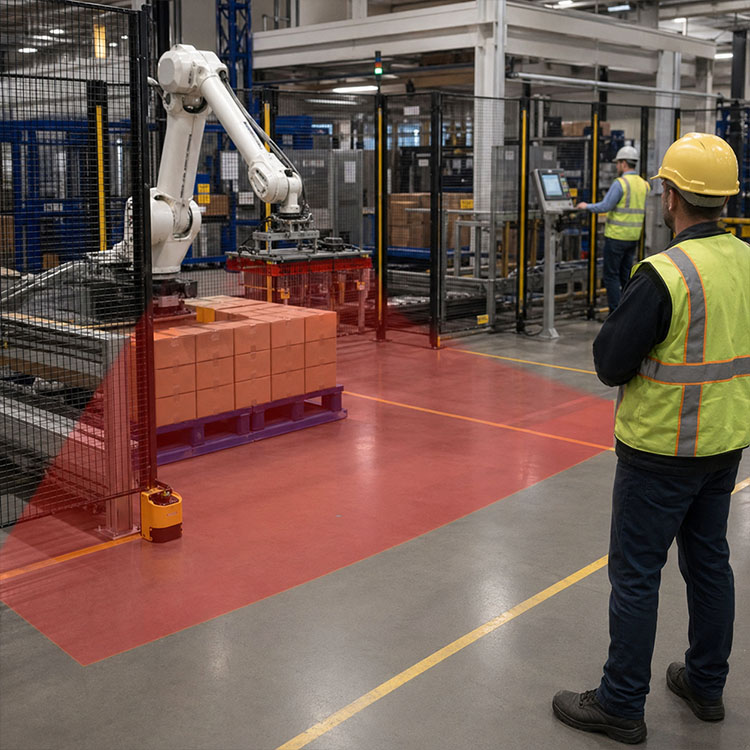
Mappa le zone. Gestisce le forme strane. Può creare campi di avviso e di protezione. Si adatta a AGV, AMR, celle robotizzate, punti di trasferimento del magazzino e impronte di macchine scomode dove una tenda piatta risulterebbe goffa. Ecco perché il sito Categoria di lidar di sicurezza appartiene alla discussione.
Ma l'intelligenza non è sinonimo di maggiore integrità della sicurezza.
Molti laser scanner di sicurezza sono classificati come dispositivi di Tipo 3 secondo la norma IEC 61496-3 e vengono utilizzati per funzioni di sicurezza fino a PL d o SIL 2, mentre le barriere fotoelettriche di sicurezza di Tipo 4 sono comunemente utilizzate per salvaguardare un'integrità più elevata, come la protezione del punto di funzionamento PL e / SIL 3. L'IFA della DGUV spiega che la norma IEC 61496 definisce i tipi 1, 2, 3 e 4 per l'ESPE e la guida alla sicurezza della Reer afferma che gli scanner laser secondo la norma EN 61496-3 sono classificati come tipo 3 o inferiore e utilizzati fino a SIL 2 / PL d o inferiore.
Questo danneggia alcuni ponti di vendita.
Uno scanner è eccellente quando la zona pericolosa è ampia, la disposizione della macchina è irregolare o una piattaforma mobile necessita di campi protettivi configurabili. Una barriera fotoelettrica è spesso migliore quando il pericolo è rappresentato da un'apertura definita e la mano dell'operatore può raggiungere rapidamente il punto pericoloso.
Per le celle complesse, la decisione potrebbe non essere “scanner o barriera”. Potrebbe essere scanner più recinzione più interblocchi più una barriera di tipo 4 all'apertura di carico. Se avete bisogno di un quadro di riferimento per questa decisione su più dispositivi, l'articolo del sito su barriere fotoelettriche di protezione dell'accesso su più lati rispetto a più dispositivi di sicurezza separati è un'utile pagina di supporto interno.
Cosa insegnano i casi OSHA meglio delle brochure
Gli opuscoli sono educati. Le ferite non lo sono.
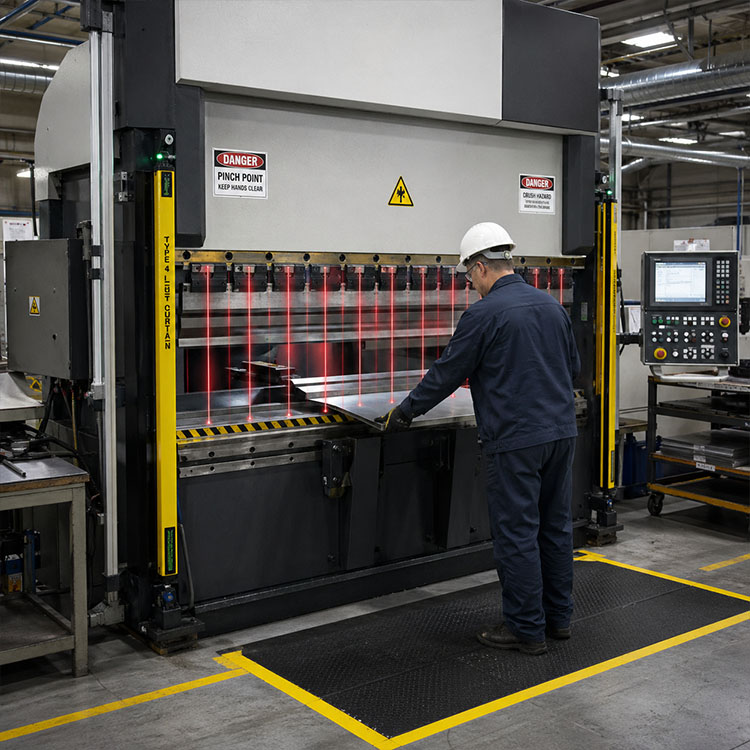
Nel maggio 2023, l'OSHA ha dichiarato che un dipendente del New Jersey ha perso tre dita nel suo primo giorno di lavoro dopo che i supervisori e i dipendenti della United Hospital Supply hanno deliberatamente aggirato la barriera fotoelettrica di una pressa piegatrice; l'OSHA ha proposto $498.464 di sanzioni e ha inserito l'azienda nel Programma di applicazione per gravi violazioni. Leggete il linguaggio dell'agenzia nella Comunicato OSHA di United Hospital Supply.
Questo caso dovrebbe essere stampato e registrato accanto a ogni conversazione “possiamo bypassarlo per la configurazione”.
Nel gennaio 2024, l'OSHA ha citato Conn-Selmer dopo che un lavoratore ha subito l'amputazione di un dito durante l'impostazione di uno stampo di una pressa; l'agenzia ha dichiarato che il tasso medio di infortuni registrabili dell'azienda dal 2019 al 2023 è stato di 7,8 lavoratori all'anno, contro una media del settore di 2,3 nel 2022.
Ora zooma. Secondo il Bureau of Labor Statistics, il settore manifatturiero statunitense ha registrato 332.600 casi di infortuni e malattie non mortali nel 2024, con un tasso di 2,7 casi ogni 100 lavoratori a tempo pieno, secondo il grafico del BLS. infortuni e malattie professionali non mortali per settore industriale.
Quindi sì, il mercato vende “le migliori barriere fotoelettriche di sicurezza per la conformità alla PL e”. Ma la frase migliore è più brutta: dimostrate la vostra funzione di sicurezza prima che l'investigatore dell'incidente la dimostri per voi.
Come scegliere le tende fotoelettriche di sicurezza senza ingannare se stessi
Iniziare con il danno.
Non il numero di modello. Non il prezzo. Né la distanza tra le travi. Né se il fornitore può spedire questa settimana. Il danno viene prima di tutto, perché la gravità, la frequenza dell'esposizione e la possibilità di evitarla determinano il livello di prestazioni richiesto prima che qualsiasi dispositivo si guadagni il posto sulla macchina.
La sequenza di conformità dovrebbe essere la seguente:
Identificare il pericolo: schiacciamento, cesoiamento, trascinamento, impatto, taglio o intrappolamento.
Definire l'accesso protetto: accesso manuale, accesso corporeo, accesso perimetrale, ingresso in cella robotica o intrusione in zona mobile.
Misurare il tempo di arresto con la macchina nello stato reale, non in un comodo stato di prova.
Determinare il PLr richiesto secondo la logica ISO 13849.
Abbinare il tipo di ESPE: Scanner di tipo 3, barriera fotoelettrica di tipo 4 o protezione combinata.
Confermare le uscite OSSD, la compatibilità con i relè di sicurezza o i PLC di sicurezza, l'EDM, il reset, il muting, la soppressione e il blocco del riavvio.
Convalidare la funzione installata, compreso il controllo del bypass e l'accesso per la manutenzione.
E poi contestare il file.
Sopravviverebbe a una verifica post-infortunio? Il calcolo della distanza funzionerebbe ancora dopo l'usura degli utensili, il ritardo pneumatico, la deriva idraulica o un arresto più lento a pieno carico? Un supervisore sarebbe in grado di disattivare o bypassare il sistema senza che sia possibile rintracciarlo?
Se la risposta è incerta, la selezione del dispositivo non è stata completata.
Per un supporto interno più approfondito, indirizzate i lettori verso Selezione del dispositivo di sicurezza e Standard di sicurezza delle macchine quando si spiega come la selezione e la documentazione di conformità lavorino insieme. Queste pagine si inseriscono naturalmente perché questo argomento si colloca esattamente tra la scelta del prodotto e l'interpretazione degli standard.
La matrice di selezione che userei davvero
Questa non è una tabella del “miglior prodotto”. È una tabella di posizionamento del rischio. Questo è importante perché la scelta di una barriera fotoelettrica di sicurezza conforme non consiste nell'acquistare il dispositivo più costoso, ma nell'adattare la classe del dispositivo al pericolo e alla funzione di sicurezza convalidata.
Scenario macchina
Un punto di partenza migliore
Perché
Errore comune
Protezione del punto di lavoro della pressa piegatrice
Barriera fotoelettrica di sicurezza di tipo 4, funzione PL e-capable
L'accesso rapido alla mano e il potenziale di lesioni gravi richiedono un'elevata tolleranza ai guasti e una distanza di arresto verificata.
Trattare il muting o il blanking come una scorciatoia invece che come una funzione controllata.
Protezione dei corridoi AGV / AMR
Laser scanner di sicurezza di tipo 3, funzione compatibile con PL d
I campi protettivi 2D configurabili si adattano alle zone mobili e ai percorsi dinamici del magazzino
Assumere che la flessibilità dello scanner significhi capacità di PL e
Apertura di accesso alla cella robotica
Barriera fotoelettrica di tipo 4 più protezioni interbloccate dove necessario
Il piano di accesso definito e il controllo del riavvio possono essere convalidati in modo chiaro
Lasciare incustodito l'accesso laterale o posteriore
Perimetro macchina irregolare
Scanner di sicurezza più recinzione o barriera fotoelettrica multilaterale
La geometria è troppo complessa per un unico piano di rilevamento piatto
Utilizzo di una tenda dove le persone possono camminare intorno al campo
Macchina per il lavaggio a umido o in condizioni difficili
Barriera fotoelettrica di sicurezza impermeabile o approccio di protezione sigillata
L'ambiente può danneggiare o destabilizzare le normali apparecchiature di rilevamento.
Ignorando il grado di protezione IP, la condensa, la posa dei cavi e i prodotti chimici per la pulizia
Macchina OEM personalizzata con telaio stretto
Barriera fotoelettrica di sicurezza compatta o non standard
I vincoli fisici richiedono un adattamento ingegneristico, non un generico adattamento da catalogo
Selezionare la risoluzione e l'altezza prima di misurare la distanza di sicurezza
Per le impronte personalizzate, il relativo link interno non è generico. Utilizzare configurazioni non standard delle barriere fotoelettriche di sicurezza quando il layout della macchina, la superficie di montaggio, il percorso del connettore o l'altezza della protezione non sono adatti ai modelli standard.
La conformità alla PL e non si compra. Si dimostra.
È qui che divento severo.
Un fornitore può fornire una barriera fotoelettrica di tipo 4. Una scheda tecnica può indicare PL e. Una scheda tecnica può dichiarare PL e. Un preventivo può menzionare IEC 61496, OSSD1 + OSSD2, 24 VDC, tempo di risposta di 10 ms, IP65, IP67 o protezione delle dita di 14 mm. Niente di tutto ciò rende automaticamente la macchina conforme.
La funzione di sicurezza installata decide.
Se la barriera fotoelettrica alimenta un ingresso PLC non di sicurezza, se il reset è cablato come un riavvio mascherato, se l'EDM è ignorato, se i contattori non sono monitorati, se il muting non è documentato, se il bypass non è controllato o se il tempo di arresto è stato ipotizzato anziché misurato, l'etichetta PL e diventa una decorazione.
PL d e PL e sono livelli di prestazione ISO 13849 che classificano una funzione di controllo legata alla sicurezza in base alla sua capacità di ridurre il rischio in condizioni reali della macchina, con PL e che rappresenta una probabilità di guasto pericoloso inferiore e un'architettura, una diagnostica e una convalida solitamente più rigorose rispetto a PL d. In pratica, PL d spesso si allinea a molte applicazioni di scanner di tipo 3, mentre PL e è comunemente previsto per la protezione di punti operativi a rischio più elevato utilizzando barriere fotoelettriche di sicurezza di tipo 4.
Qual è la differenza tra i dispositivi di sicurezza di tipo 3 e di tipo 4?
Il Tipo 3 e il Tipo 4 sono classificazioni ESPE IEC 61496 che separano i dispositivi di protezione in base ai requisiti di progettazione relativi alla sicurezza; il Tipo 3 è comunemente associato agli scanner laser di sicurezza e alle applicazioni PL d, mentre il Tipo 4 è comunemente associato alle barriere fotoelettriche di sicurezza a maggiore integrità e alle applicazioni PL e. La differenza pratica non è il grado di commercializzazione, ma la tolleranza ai guasti, il comportamento di auto-monitoraggio e la funzione di sicurezza massima difendibile.
Uno scanner laser di sicurezza può sostituire una barriera fotoelettrica di sicurezza?
Un laser scanner di sicurezza può sostituire una barriera fotoelettrica di sicurezza solo quando la valutazione del rischio, il livello di prestazioni richiesto, la geometria di rilevamento, il tempo di arresto, la velocità di avvicinamento e i risultati della convalida dimostrano che una funzione basata su scanner di tipo 3 è sufficiente per il pericolo. Per le zone irregolari del pavimento, gli scanner possono essere eccellenti; per i pericoli gravi del punto di lavoro, una barriera fotoelettrica di sicurezza di tipo 4 è spesso il punto di partenza più difendibile.
Il tipo 4 è sempre richiesto per la conformità alla PL e?
Il tipo 4 non è l'unica frase che conta, ma per le barriere fotoelettriche di sicurezza optoelettroniche utilizzate per la protezione di macchine ad alto rischio, il tipo 4 è comunemente la classe di dispositivo allineata con le funzioni di sicurezza con capacità PL e secondo le pratiche IEC 61496 e ISO 13849. La piena affermazione della PL e dipende ancora dall'intera catena di controllo, comprese le uscite OSSD, la logica di sicurezza, gli attuatori monitorati, il cablaggio, la diagnostica e la convalida.
Come scegliere tra uno scanner e una barriera fotoelettrica?
Scegliete tra uno scanner e una barriera fotoelettrica adattando il dispositivo alla geometria dell'accesso, alla gravità dell'infortunio, alla distanza di arresto, al PLr richiesto e al fatto che il pericolo sia un'apertura definita o un'area configurabile. Una barriera fotoelettrica è adatta ai piani di accesso piani e alla protezione dei punti; uno scanner è adatto al monitoraggio dell'area del piano, ai percorsi AGV e alle zone irregolari in cui una barriera lascerebbe punti ciechi.
Cosa bisogna controllare prima di acquistare le tende fotoelettriche di sicurezza?
Prima di acquistare le barriere fotoelettriche di sicurezza, verificare il PLr richiesto, il tipo di IEC 61496, la risoluzione, l'altezza di protezione, il campo operativo, il tempo di risposta, le uscite OSSD, la compatibilità con i relè di sicurezza o i PLC di sicurezza, il grado di protezione, la distanza di montaggio, il rischio di superfici riflettenti, l'interblocco al riavvio, le esigenze di muting o blanking e la misurazione del tempo di arresto. L'acquisto deve seguire la valutazione del rischio, non sostituirla.
I vostri prossimi passi: Smettere di chiedere prima il prezzo
Non inviate al fornitore solo “altezza, gamma, quantità”.”
Inviare il tipo di macchina, la descrizione del pericolo, il PLr richiesto, i dati sul tempo di arresto, la direzione di accesso, il disegno di montaggio, le condizioni ambientali, i requisiti di uscita, la logica di reset, le aspettative di muting o blanking e il mercato di destinazione. Chiedere se l'applicazione prevede uno scanner di tipo 3, una barriera fotoelettrica di sicurezza di tipo 4 o un pacchetto di protezione combinato.
Se state scegliendo barriere fotoelettriche di sicurezza per la conformità alla normativa PL e o se state confrontando uno scanner laser di sicurezza con una barriera fotoelettrica per applicazioni PL d, partite dal rischio effettivo e procedete a ritroso fino al dispositivo. Per un supporto specifico all'applicazione, consultare la sezione Gamma di barriere fotoelettriche di sicurezza, confrontarlo con Lidar di sicurezza, e quindi contattare il team di ingegneri tramite la pagina di richiesta di preventivo con il tempo di sosta e i dettagli del layout.
Questo è il modo più adulto di acquistare la sicurezza della macchina.